Welcome to The Aboriginal Art of String Making page
Make beautiful string (after a while) from fibres
.jpg/:/rs=w:1209,cg:true,m)
I have been making string for nets and bags, tying stone axe handles and making other artefacts for 40 years or so...
Always using it as a preference to bought string... and worth more in the long run too!
My artefacts and art have been collected worldwide.
All the information in this download is drawn from my real world experience using bush skills for surviving in the bush and getting food.
So ... learn how to make string from tree bark or most grasses, palm trees, strips of tissue paper, rags, plastic bottles...
Photo by Dominique Normand
Bark collection from the bush

This download includes ....
- String Making movie from Start to Finish
- Bark Collecting in the Bush Manual (printable PDF)
- String Making movie (another one)
- Bark for String Making (printable PDF)
Take your time and replay parts, like:
- How to collect bark.
- How to process it for string making.
- How to prepare the strands.
- How to roll it on your leg and make string in detail.
- How to make joins.
Once learned it can be done with any fibre.
I have done it hundreds and hundreds of times.
Enough times to make it look easy :)
...which it is.
Welcome to braveant
Thinning the bark to the same thickness

It is important in how you prepare the fibre so it will make professional string.
All the info in this download is from my own life's practice making artefacts or just making lovely string for museums and crafts people.
These technique carry through to most bush fibre processing.
Preparing

I use Beach Hibiscus (Cotton tree).
As it dries, it takes on different shades and colours...
How to start...making string...!!!
How to start...making string...!!!
How to start...making string...!!!
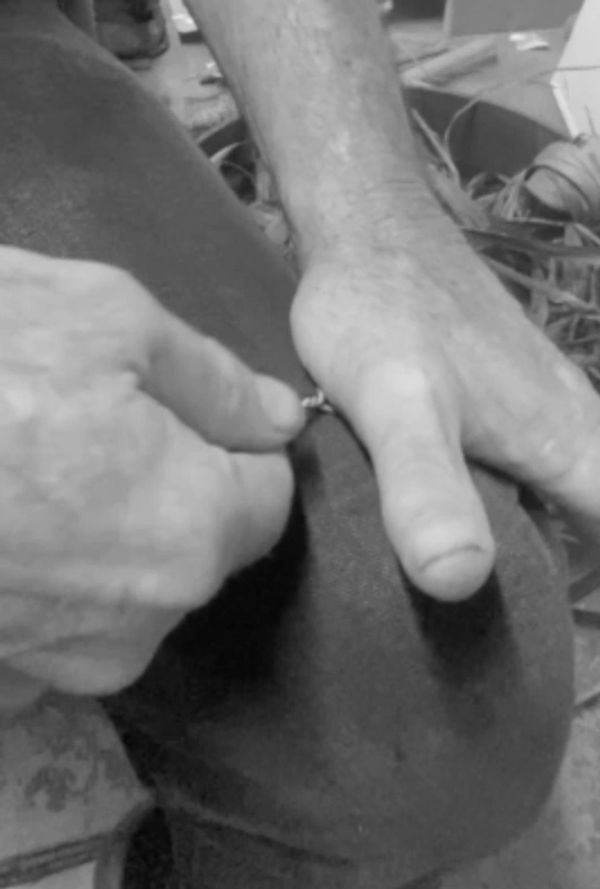
It takes a little practice, but the technique is pretty straight forward.
Just have to get the hang of it and it's easy...
Watch the video as you make the string a couple of times.
Once you start experimenting you will be amazed by the potential string making materials all around you.
They just need to be collected, dried, dampened, fibres separated and then used.
Or better still...Recognise them lying on the ground perfectly dried and cured waiting for you...
(From appropriate places of course)
Many, many grasses will work fantastically.
Enjoyable, relaxing, creative...
How to make it longer...
How to start...making string...!!!
How to start...making string...!!!

Without getting scientific, if you twist a fibre until it's tight and bend it in half, there is nothing that will stop that fibre from twisting around itself to become string.
From the smallest grass to the thickest bark to the tiniest silver wire, all string is made using this principle
Sources of fibre like :
Wattle Tree Bark.
Fig tree bark.
Palm trees grow everywhere, their leaves and and branches have long fibres.
Everything you need to make string is in the videos and files.